
SHOES
MOUNT TO COAST
M1
Is this really a mountain shoe?
.
MY VERDICT
4 / 5
An exceptionally bouncy, efficient ultra shoe that took me 400 km to fully appreciate. Brilliant on rolling trails and climbs, but initially unpredictable on technical descents — a shoe that rewards the right runner on the right terrain.
275 g MEN
US 9
WEIGHT
38mm / 34mm
STACK HEIGHT
Vibram Megagrip
OUTSOLE
JETCELL Foam
MIDSOLE
THE VERDICT
A seriously responsive ultra shoe, but not a do-everything mountain shoe.
The Mount to Coast M1 delivers exactly what I bought it for: exceptional energy return, efficient running on rolling trails and climbs, and cushioning that helped my legs feel fresher over long distances. After 400 km, the construction remains excellent, the grip is dependable, and my experience at the Bennachie Ultra showed just how well it can perform once you learn to work with its lively midsole.
However, the roomy toe box, fiddly dual-lacing system and initially unpredictable behaviour on technical descents mean it won’t suit everyone. At £185, I’d want to be confident that its strengths match the terrain I run.
I’d happily wear it again for the Bennachie Ultra, but for my next purchase, I’d seriously consider trying the T1 instead.
Disclosure: I purchased these shoes myself and have tested them over approximately 350–400 km. This review reflects my own experience and honest opinions.
FIRST IMPRESSIONS
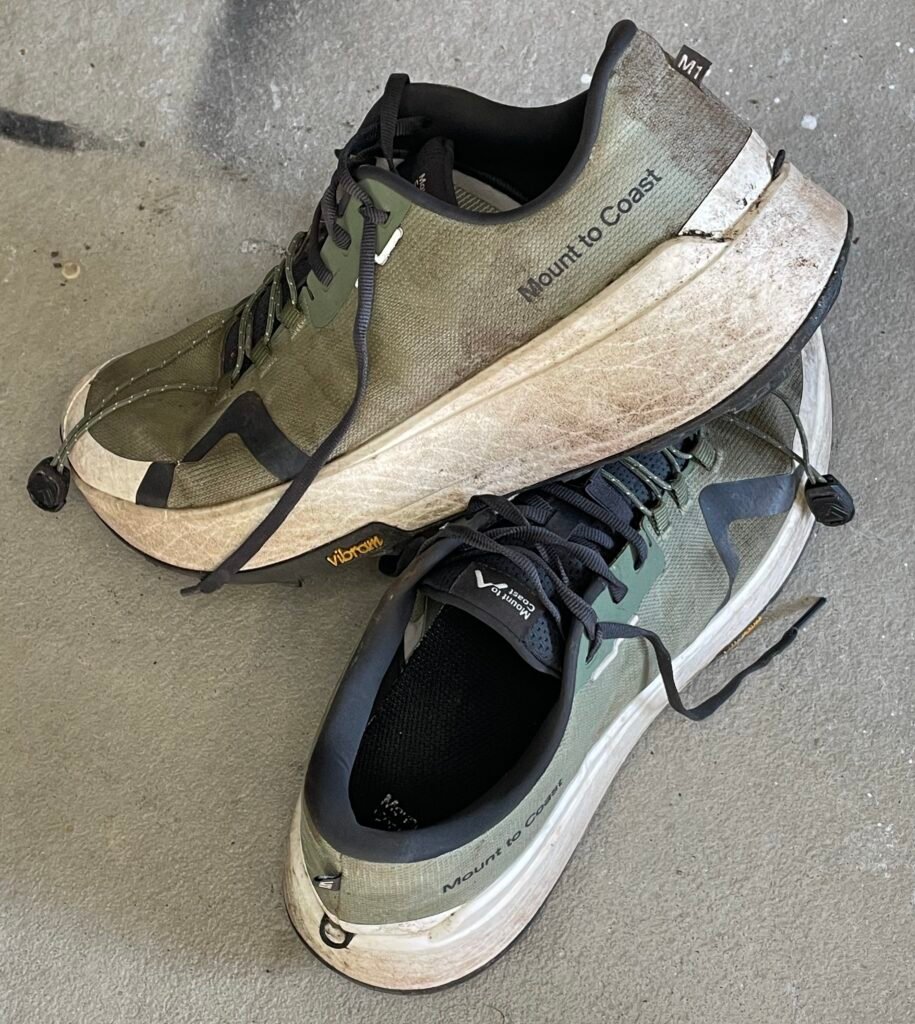
The first thing I noticed was the quality. I like the look of the M1, particularly the green colourway, and the materials feel properly premium. It’s a modern-looking shoe, with a light, airy upper and a finish that feels more expensive than your average trail shoe.
But the real surprise came when I put them on.
The JETCELL midsole felt mental. Bouncing around the house, I felt like Tiger. I was used to trail shoes built for big mountain days, where the focus is on getting through rough ground, and suddenly I had what felt like trampolines on my feet.
I was pretty excited to get them out on the trails.
My first proper run was a familiar 14 km route on Bennachie with around 1,000 m of ascent. It didn’t take long to see what the shoe could do.
THE RIDE: AN ABSOLUTE MACHINE UPHILL
On the climbs, they felt like an absolute machine. The midsole seemed to help me bounce up steep sections, and the shoe felt responsive rather than heavy or cumbersome.
On the flats and rolling trails, the M1 felt incredibly efficient. There was a noticeable spring to every step, and I found myself moving quicker without feeling like I was having to force the pace. The energy return was exactly what I’d hoped for when I bought them.
What surprised me most was how my legs felt afterwards. Having pushed up and down a route I knew well, I expected to feel more beaten up than I did. My legs felt relatively fresh after that first run, and they still felt better than I expected the following day.
Obviously, that’s my own experience rather than proof that the shoe reduces fatigue for everyone. But it was enough to get me interested.
Then I hit the technical descents.
TECHNICAL DESCENTS: WHERE THINGS GOT COMPLICATED
This was where my relationship with the M1 started to go downhill. Literally.
The problem wasn’t that I thought the outsole had poor grip. The Vibram Megagrip was doing its job. The problem was controlling the shoe.
On uneven, rocky ground, I’d land on something and instead of the shoe settling and absorbing the impact, it felt like it was pinging me back out again. I struggled to place my feet confidently and felt like I was bouncing around rather than working with the terrain.
I ended up slowing down on descents because I didn’t trust what was going to happen when I landed. It felt like I was smashing my ankles around because I couldn’t get the foot placement I wanted.
I had a similar experience on the Mamores circuit. I held back on the descents because I was worried the shoe would bounce me into an ankle injury.
That’s a frustrating feeling when you’re running in the mountains. You want to be able to trust your shoes and get on with it, not spend the descent thinking about every footstep.
At that point, I wasn’t convinced the M1 was the right shoe for the kind of mountain running I’d bought it for.
GRIP: NO COMPLAINTS HERE
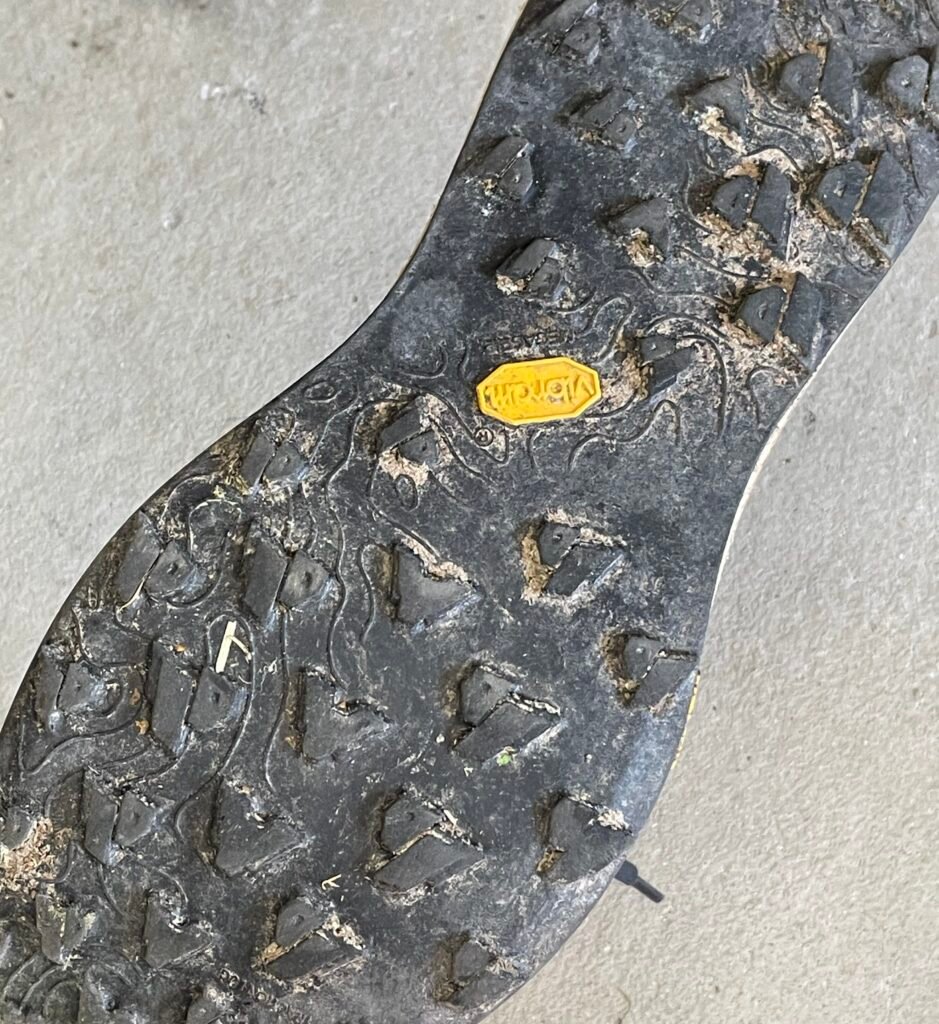
The grip has been one of the most consistent parts of the shoe.
The Vibram outsole has worked well for me in a mixture of conditions, including wet, cold, warm and slippery ground. I know what I’m getting from it, and I’ve been happy with the traction.
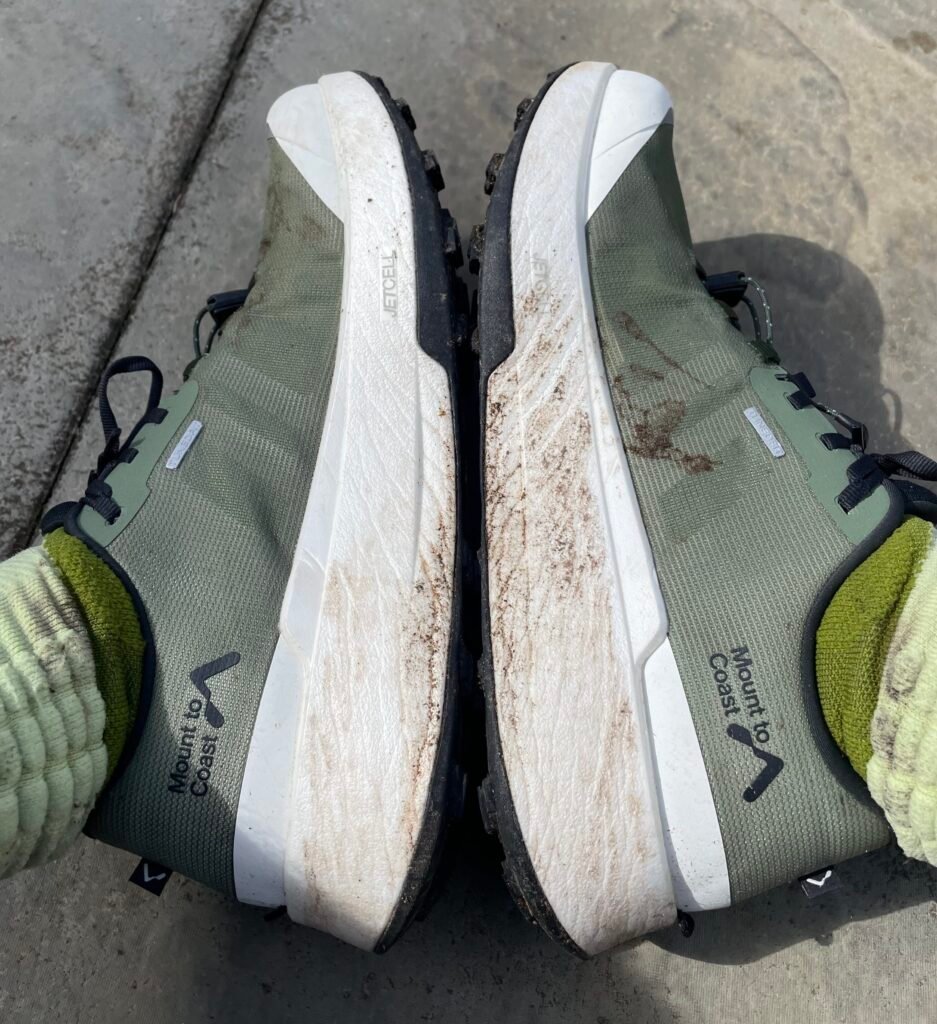
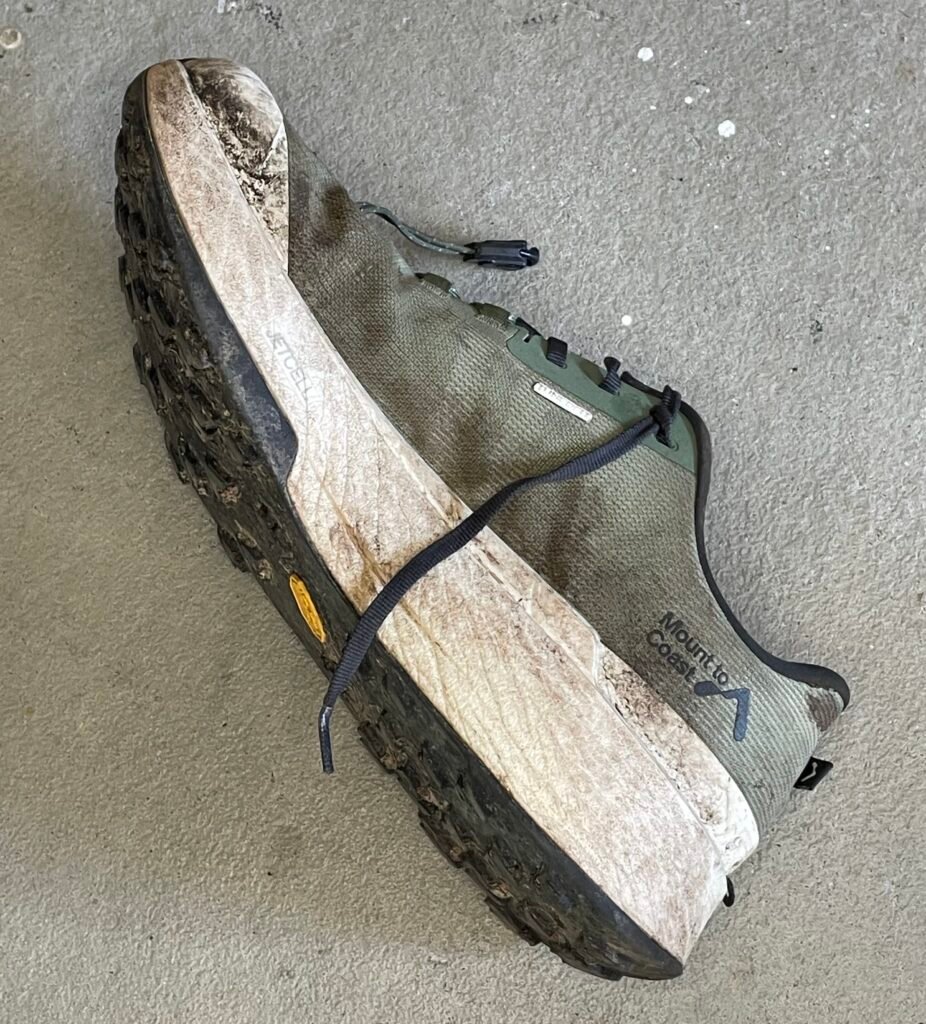
The outsole also provides full coverage underneath the shoe, so there’s no exposed midsole foam on the bottom for sharp rocks to catch and damage.
After 350–400 km, the lugs are showing some wear, but there’s still plenty of life left in them. Grip hasn’t noticeably deteriorated during my testing.
I’ve got no real complaints about the outsole.
FIT AND THE DUAL-LACING SYSTEM
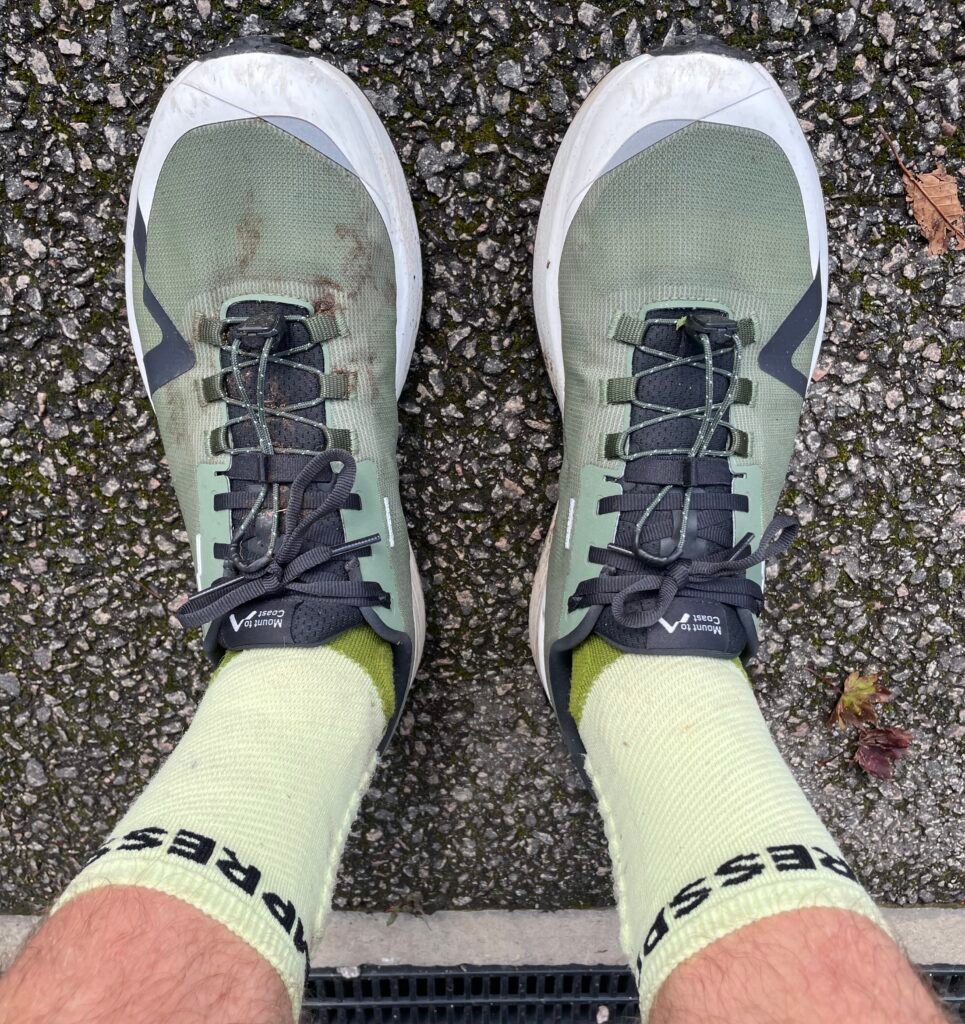
I found the shoe true to size, but it feels roomy. There’s plenty of space in the toe box, which some runners will love, but I have relatively narrow feet and would prefer a little less volume.
On descents, my toes could move forward inside the shoe. I also noticed a hot feeling underneath my big toe, which I suspect was down to the extra movement and rubbing.
The heel lockdown, on the other hand, has been spot on. Once the shoe is on and adjusted, my heel doesn’t budge.
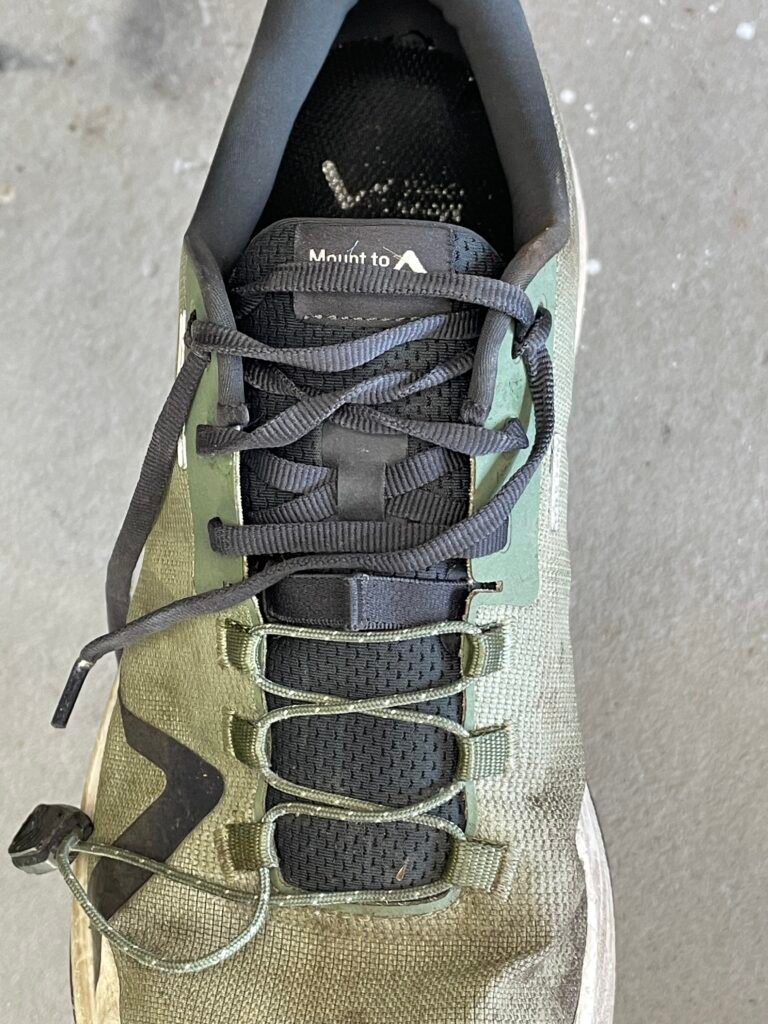
The dual-lacing system is where I think things could be improved. I like the idea of being able to adjust different parts of the shoe independently, but in practice I’ve found it a bit of a pain in the arse. The pull cord isn’t the easiest to adjust, and the release button never seems to work particularly well for me.
I have to slacken the lacing right off to get the shoe on and off comfortably. If I’ve tightened it properly for running, I can’t just pull the shoe off without loosening it again.
Once I’m running, though, the fit is generally fine. I wore them for the Bennachie Ultra and didn’t find myself having to fiddle with the laces during the 50 km race.
If Mount to Coast asked me to change two things, I’d start with the lacing system and reduce the volume slightly. I’m not convinced the dual lacing is necessary to get the lockdown I need, and I’d prefer a little less space around my foot.
WHAT ABOUT COMFORT OVER DISTANCE?
This is where the M1 started to win me back.
The springy feeling doesn’t disappear halfway through a run. The shoe continued to feel bouncy, and I could still feel that response even after stopping.
I’ve also noticed a difference when switching between the M1 and other shoes in my rotation, including the La Sportiva Prodigio 2 and Hoka Speedgoat 7. My feet sometimes felt more fatigued in those shoes than they did in the M1.
I can’t say for certain why that is. The roomy fit might mean my feet are working harder to compensate for the extra movement, but that’s only a theory. What I can say is that, for me, the M1 has felt remarkably comfortable over distance, and the midsole’s response has been a genuine positive.
After the initial testing, I started using the M1 for commuting, pavement, easy runs and rolling trails rather than constantly taking it onto the most technical ground I could find.
On pavement, it felt awesome. On rolling trails and climbs, it continued to feel efficient and lively.
I started to think that perhaps I’d misunderstood what I wanted from the shoe.
THE BENNACHIE ULTRA: WHEN IT FINALLY CLICKED
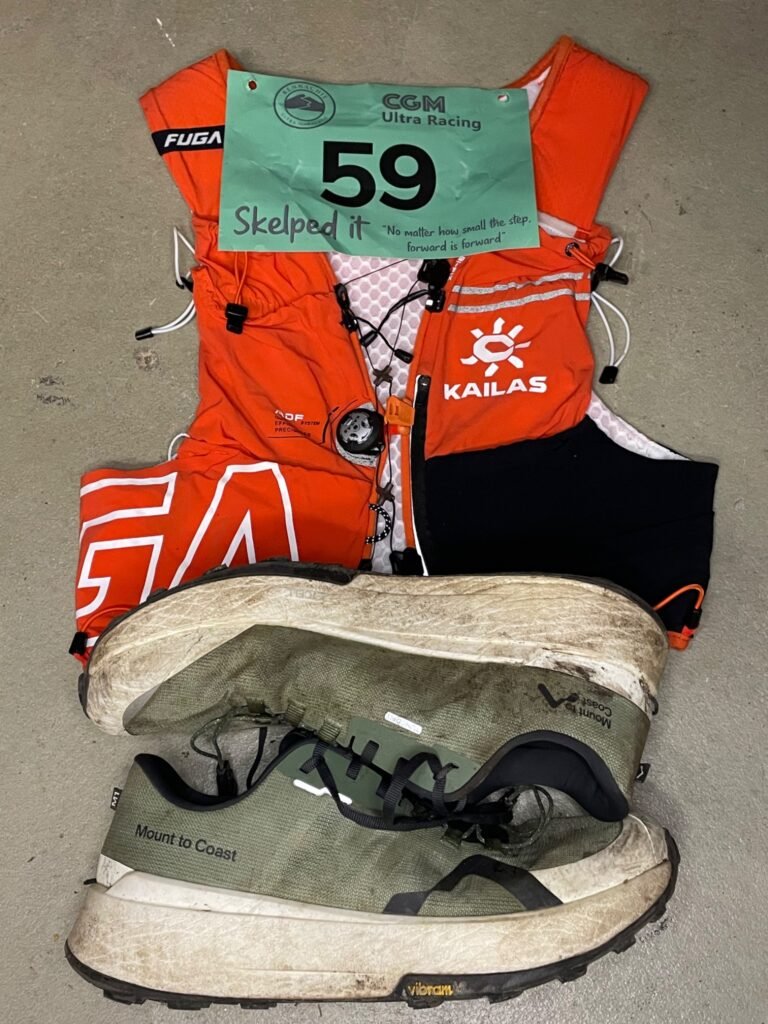
I decided to race the M1 at the Bennachie Ultra, a 50 km trail race. The plan was to make use of the shoe’s cushioning and energy return over the first half, but I knew I was taking a gamble.
I expected to regret it when the descents came around.
The first half felt much as it always had: bouncy, comfortable and efficient. The shoe stayed lively as the kilometres ticked by.
But somewhere around halfway, I realised I was descending with much more confidence. There wasn’t one obvious moment where everything changed. I just found myself running downhill properly, placing my feet where I wanted them and trusting the shoe rather than fighting against it.
By the second half of the race, I was pushing harder on the descents. At 30 km, 40 km and even towards 50 km, I was running fast and confidently. In the final 5 km, I was running at under 4 min/km pace, and the shoes were still doing their job.
I was battling cramps, but the M1 wasn’t the thing holding me back.
I also ran again within a couple of days. Aside from the lingering pain from the cramps, my legs hadn’t been destroyed by the race, despite how hard I’d pushed the second half.
Did the foam soften with mileage and become easier to control? That’s one possibility, but I can’t prove that’s what happened. It could equally have been me adapting to the shoe, or the particular terrain and conditions on the day.
Whatever the reason, my experience of the M1 at the end of those 50 km was very different from my first few technical runs.
I’d gone into the race expecting to regret wearing them. Instead, I finished with a much better understanding of what they could do.
DURABILITY AFTER 400KM
The M1 has held up very well so far.
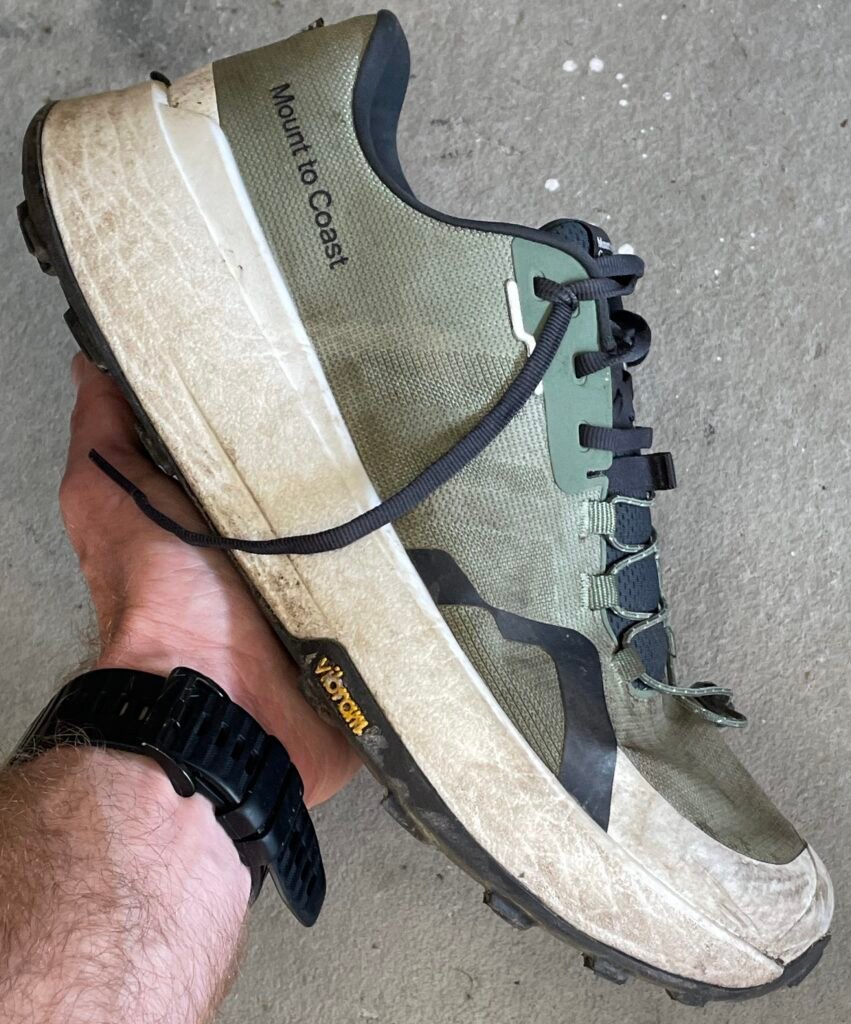
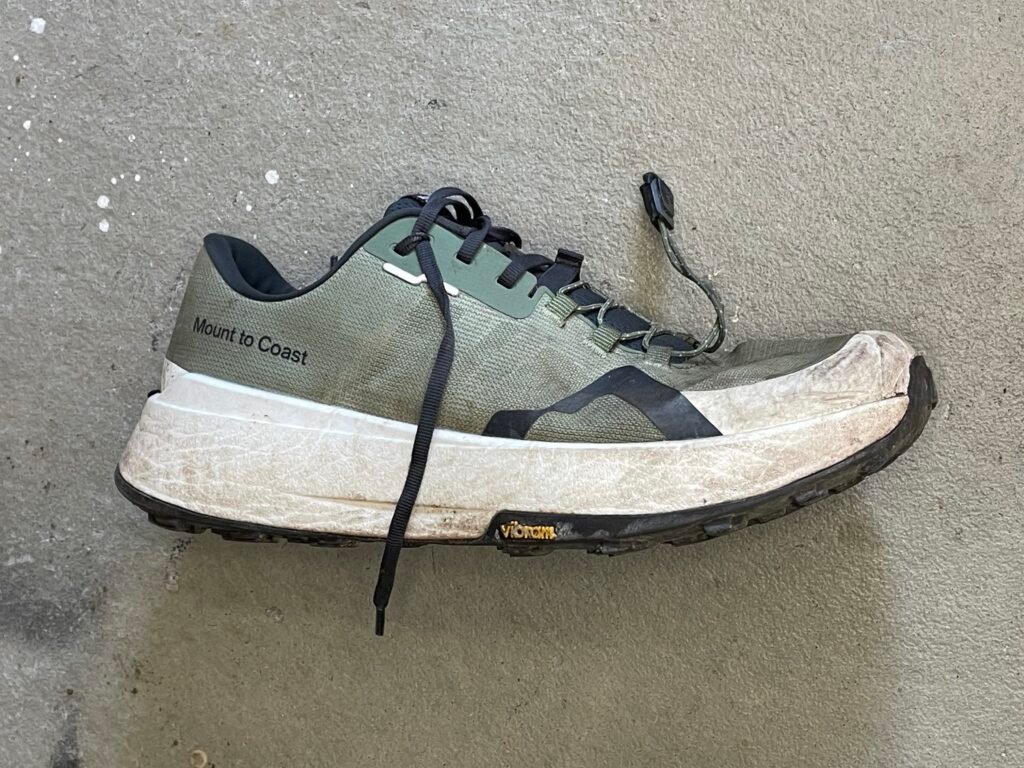
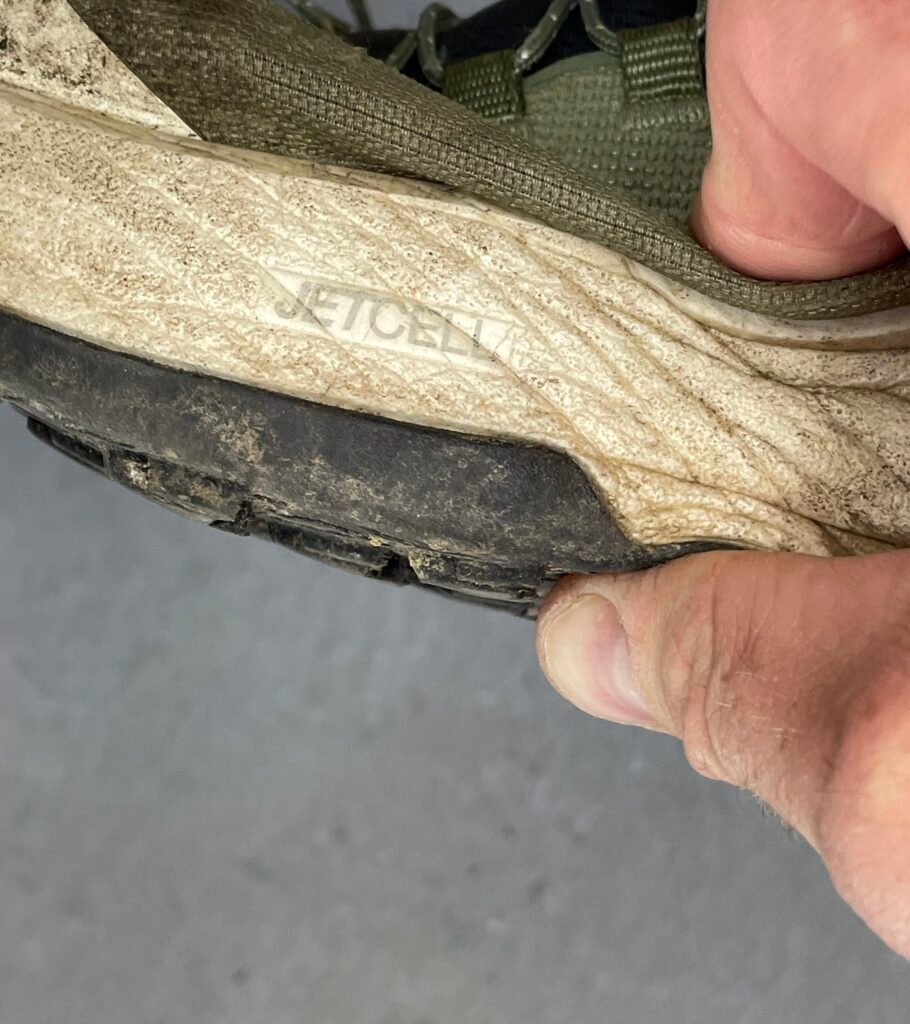
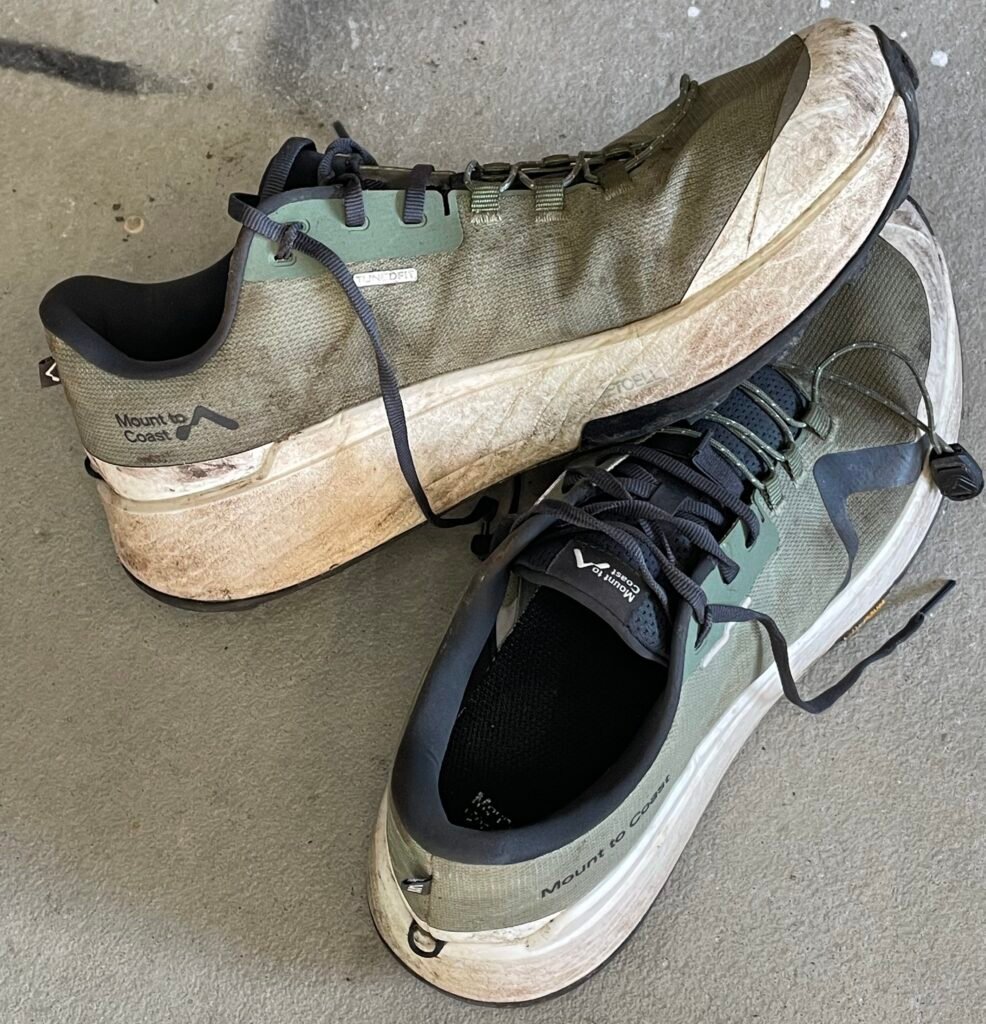
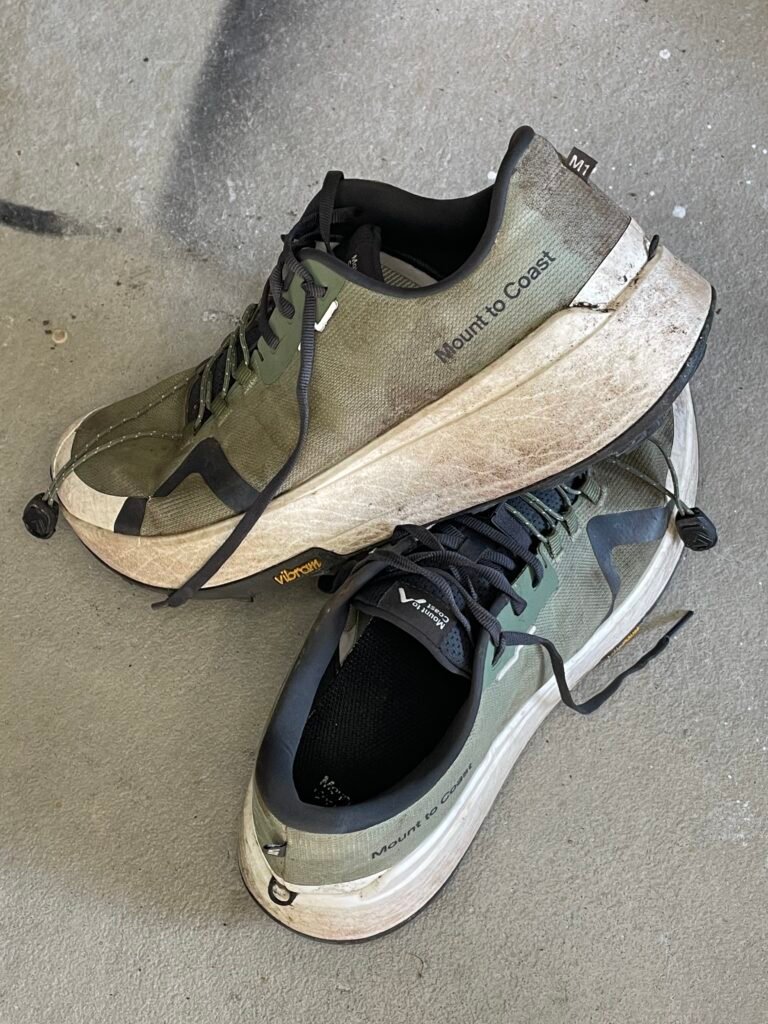
The lugs have worn slightly, but there’s plenty of life left. The upper is still in excellent condition, with no issues to report, and the midsole hasn’t shown any obvious problems. Other than the dirt and a few wrinkles in the midsole, the shoes still look great.
The overall construction feels solid and well put together. They have the feel of a premium shoe, and after this mileage I’ve got no major durability concerns.
That’s not a claim that they’ll last a particular number of kilometres; I haven’t tested them long enough to know that. But there’s nothing in their condition so far that gives me reason to complain.
WHO IS THE M1 ACTUALLY FOR?
I think the M1 makes most sense for ultra runners who want a responsive, cushioned shoe for long distances on trails that aren’t relentlessly technical.
If your running involves rolling trails, long climbs, smoother mountain paths and plenty of kilometres, I can see the appeal. The energy return is excellent, and I’ve found the shoe comfortable over distance.
But if you spend most of your time on steep, rocky, technical mountain terrain, I’d be more cautious. My early experience was that the bounce made it difficult to control the shoe on descents. That might not be an issue for everyone, but it was a real issue for me until I’d spent more time in them.
The roomy fit is another thing to consider, particularly if you have narrow feet. And while the lacing system might work brilliantly for other runners, it hasn’t been my favourite part of the shoe.
I wouldn’t recommend buying the M1 purely because of the energy-return claims or because it looks like a good mountain shoe on paper. You need to consider the terrain you actually run and how you get on with that very springy ride.
WOULD I BUY THEM AGAIN?
Yes, I’d consider wearing the M1 again for a race like the Bennachie Ultra. After that experience, I’d be much more confident taking them into a similar event.
Would I buy another pair without considering the alternatives? Probably not.
I’d be interested in trying the Mount to Coast T1 next. It’s marketed towards technical terrain, which is closer to what I originally had in mind when I bought the M1 for mountain running. I haven’t tested the T1, so I can’t say whether it would suit me better, but it’s the model I’d look at next.
The M1 has given me the responsive midsole I wanted, and in some ways it has exceeded my expectations. I just needed a lot more time in it than I expected to work out where it fits into my running.
MY VERDICT
The Mount to Coast M1 is a seriously bouncy, responsive shoe. On rolling trails and climbs, I’ve found it incredibly efficient, and over longer distances I’ve been impressed by how comfortable it remains. The grip has been reliable, the build quality is excellent, and after 350–400 km it’s holding up well.
But I wouldn’t call it a shoe for every mountain runner. My early experiences on technical descents were poor, and I spent a fair amount of time slowing down because I didn’t trust the bounce. That’s a significant drawback if technical mountain terrain is where you do most of your running.
The Bennachie Ultra changed my opinion. By the second half of that race, I was descending confidently and running hard right to the finish. I still can’t say whether the shoe changed or I simply learned how to run in it, but I came away with a much better appreciation for what it offers.
I bought the M1 for the mountains, but I’ve come to appreciate it most on long-distance trails that are a little less technical than I first expected. The JETCELL midsole is the real selling point for me. I got the bounce and energy return I wanted — better than I imagined, in fact — but it took time to understand the shoe.
It won’t be for everyone, and I’d change the lacing and reduce the volume if I could. But for the right runner, on the right terrain, I think there’s a very good shoe here.
BOUNCY. RESPONSIVE.
BUILt FOR THE LONG HAUL.
The M1 took me 400 km to fully appreciate. Brilliant on rolling trails and climbs, but a different beast on technical descents.
It won’t suit everyone, but for the right runner and the right terrain, that JETCELL midsole is seriously impressive.
THINKING ABOUT THE M1?
Affiliate disclosure: This post contains affiliate links. If you buy something through one of these links, I may earn a small commission at no extra cost to you. This helps support Miles & Mud and keeps the site running.
FOLLOW THE JOURNEY
MORE MILES AND MUD
Behind the scenes, short adventures, gear updates, training, the plot and whatever else is going on in the hills and at home.



✉️ GET NEW ADVENTURES STRAIGHT TO YOUR INBOX
RACE REPORTS, ROUTE IDEAS AND MORE.
No spam. Just the good stuff.